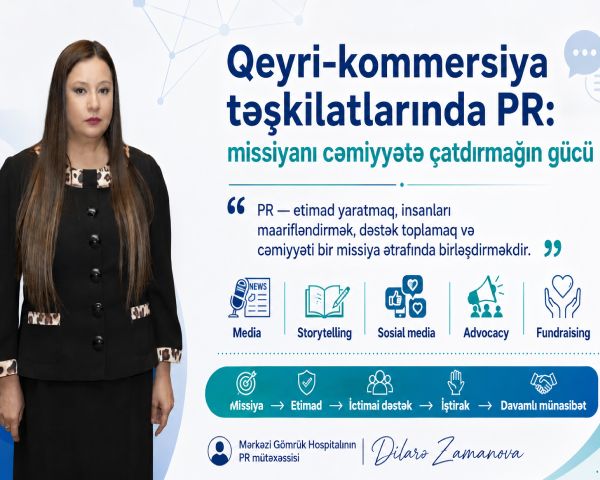
The primary goal of non-profit organizations is to fulfill a mission that serves the public good. Organizations working in areas such as solving social problems, supporting low-income families, protecting animals, safeguarding the environment, healthcare, and education need effective public relations — PR — to communicate their goals clearly and effectively to the public.
From this perspective, PR is not simply a tool for disseminating information about an organization. It is a strategic communication tool aimed at building trust, raising awareness, attracting support, and bringing society together around a specific cause.
Why Is PR Important for Non-Profit Organizations?
No matter how valuable the mission of a non-profit organization may be, if people are unaware of its activities, the organization may struggle to gain the support it needs. Through PR, an organization can:
communicate its mission to a wider audience;
build public trust;
establish relationships with the media;
attract volunteers and partners;
create opportunities to engage donors and secure financial support;
contribute to public discussions on socially significant issues;
influence changes in public attitudes and behavior.
The key point is that communication should not be limited to answering the question: “What do we do?” A much more important question is: “Why do we do it, and what change are we creating for society?”
1. Building Effective Relationships with the Media
For non-profit organizations, the media is one of the most important communication channels. Building long-term and trustworthy relationships with journalists helps organizations reach a wider audience.
Press releases, interviews, expert comments, event coverage, and information about social projects are among the main forms of media collaboration.
However, there is an important principle here: journalists should be provided not simply with information about the organization, but with information that is interesting and useful to their audience.
For example, an animal shelter could simply say: “There are 50 animals in our shelter.” A more effective approach would be to educate the public about responsible pet ownership, caring for animals, attitudes toward stray animals, and responsible adoption.
2. Storytelling — The Power of Stories
Storytelling plays a particularly important role in non-profit PR. People often respond more strongly to real-life stories than to statistics. Therefore, organizations try to demonstrate the real changes their activities create in people’s lives.
For example:
“As part of our project, we provided assistance to 100 families” provides information.
However, a story that answers the question “What changed in the life of a family that received support through the project?” can create a much stronger emotional connection with the audience.
The purpose is not to manipulate people’s emotions. The main goal is to present the problem and the real impact of the work in an ethical, respectful, and sincere way.
3. Social Media — Building a Community
Today, social media is one of the most accessible communication platforms for non-profit organizations. Through Instagram, Facebook, TikTok, YouTube, and other platforms, organizations can:
share educational and awareness-raising information;
present their projects;
attract volunteers;
livestream events;
share success stories;
answer questions from their audience;
run campaigns to attract support.
However, social media should not be used solely for publishing announcements. One of the key objectives of a successful non-profit communication strategy is to transform a passive follower into an active member of the community.
For example, instead of simply asking followers to “Like this post,” organizations can encourage them to participate in volunteer activities, share educational content, or take part in a specific social initiative.
4. Advocacy — Building Public Support and Creating Change
One of the important areas of non-profit PR is advocacy — building public support around a particular social issue.
Through campaigns, educational initiatives, expert statements, and media activities, an organization can draw public attention to a specific problem.
For example, an environmental organization may launch a campaign to reduce plastic waste. The goal is not only to increase the organization’s visibility, but also to help people understand the importance of the issue and encourage positive behavioral change.
5. Fundraising and PR: Support Is Difficult Without Trust
Financial support is essential for the sustainability of non-profit organizations. However, fundraising should not be limited to the message: “Give us money.”
Before providing support, people want to trust the organization and be confident in its activities and transparency. This is why PR plays an important role:
Mission → Trust → Public Support → Participation → Sustainable Relationships
When an organization openly communicates how the funds it raises are being used, what results have been achieved, and what changes have taken place, it can strengthen the trust of its audience.
6. How Do Digital Tools Strengthen PR?
Modern technologies enable non-profit organizations to reach wider audiences. Through social media analytics, organizations can identify which topics generate the most interest, which formats are shared most frequently, and which messages receive the strongest audience response.
This information helps organizations develop more effective communication strategies in the future.
For example, if short educational videos receive more views than long-form text posts, an organization can increase the share of video content in its content strategy.
The Most Important Principle in PR: Sincerity and Transparency
The most valuable asset of PR in non-profit organizations is trust.
Exaggerated promises, manipulative storytelling, and non-transparent communication may attract attention in the short term, but in the long term they can damage an organization’s reputation.
Therefore, successful PR should be built on:
a sincere message + a real story + transparent activities + consistent communication.
The main goal of PR in non-profit organizations is to unite people around a mission and create communication that contributes to real social change.
Media relations, storytelling, social media, community engagement, advocacy, and fundraising are not separate activities. They are different components of a unified PR strategy.
Successful non-profit PR does not simply tell people “What we do.” It answers a much more important question:
“What does our work change in society?”
A clear answer to this question can transform an audience from simple observers into supporters, volunteers, and active participants in the mission.
Dilara Zamanova
PR Specialist, Central Customs Hospital