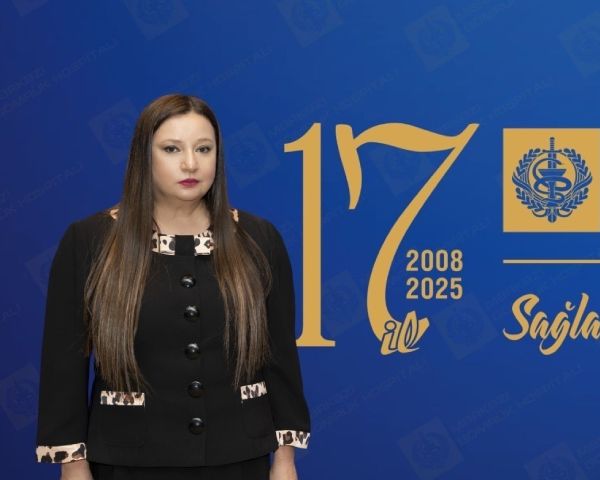
Author: Dilara Zamanova
PR Specialist at the Central Customs Hospital
Communication is rapidly evolving, and written text now stands at the center of these changes. Just a few years ago, phone calls and face-to-face meetings were the primary means of communication. Today, however, people increasingly prefer messaging and interacting via social media. This shift requires PR professionals to adopt new approaches and develop new skills.
Why is written text so important?
Written communication is no longer just a means of conveying information — it has become one of the key tools for shaping an organization’s image. Very often, the first impression of an organization is formed through the texts it publishes. Therefore, every PR text must be not only informative, but also clear, reliable, and trustworthy.
This is especially important for organizations operating in the healthcare sector. For patients and their families, receiving information in a simple and understandable format is crucial, as it directly affects their level of trust.
The impact of social media and messaging platforms
Social media and messaging platforms have completely transformed the rules of communication. On these platforms, users tend to prefer short, concise, and emotionally engaging texts over long and complex ones.
For this reason, a PR specialist must understand the language of each platform and adapt the message accordingly. For example:
• Instagram — visual and short texts
• Facebook — more detailed and informative posts
• Telegram — fast and concise updates
Main types of PR texts
PR activities involve different types of texts serving various purposes:
Press release — used to deliver official information through media channels.
Article — provides a more detailed and analytical explanation of a topic.
Post — created for social media and typically has an оперативе (fast-paced) nature.
Expert commentary — presents a specialist’s opinion and professional perspective.
Each of these formats has its own structure, language, and objective. A successful PR specialist must be able to apply these differences effectively.
Key principles of an effective PR text
To write an effective PR text, several key principles should be followed:
Clarity and simplicity
The text should be easy to understand. Complex terminology should be minimized.
Accuracy and reliability
Information must be verified and trustworthy. This is particularly important in the medical field.
Structure
The text should be logically organized into sections to ensure easy comprehension.
Audience focus
The key question when writing is: “How useful is this information for the audience?”
Emotional balance
The text should be informative while also having a moderate emotional impact.
PR texts are among the most powerful tools for building trust, creating a positive image, and maintaining a strong connection with the audience.
In sensitive fields such as healthcare, trust is a critical asset. People want to be confident in the accuracy of information and feel safe. A well-written PR text builds this trust: a clear, precise, and sincere tone inspires confidence, while complex and unclear language can push audiences away.
In addition, PR texts gradually shape an organization’s image. Every post, statement, and article contributes to how the audience perceives the organization. When texts are created consistently, professionally, and strategically, they lead to the formation of a strong and reliable brand. Otherwise, inconsistent and uncoordinated communication weakens the image.
Another important aspect is building a connection with the audience. Modern communication is no longer one-sided — people want not only to read but also to react, ask questions, and engage in dialogue. A good PR text encourages this interaction, turning the reader from a “passive observer” into an “active participant.”
These skills are essential for every PR professional. Today, it is no longer enough to simply write texts — they must be created strategically, serve a specific purpose, and deliver measurable results. Every sentence should perform a function: to inform, persuade, generate interest, or prompt action.
Sometimes, a well-written text can be more effective than long and detailed explanations. Modern readers make decisions quickly, and their attention must be captured within the first few seconds. Therefore:
• The first sentence must grab attention
• The text should be specific and focused
• Unnecessary words should be avoided
• The message should be clear and memorable
Every sentence in a PR text should serve a common goal and shape a particular thought or emotion in the reader. Sometimes, even a well-constructed paragraph can have a stronger impact than a lengthy presentation.